

Fleas, Ticks and Worms: Finding the Right Parasite Protection for Your Pet

Fleas, ticks and worms are common parasites that can affect our pets, sometimes causing irritation but, in other cases, leading to more serious health problems.
When it comes to parasite prevention, not every pet has the same level of risk. An indoor cat living alone will have a very different risk level from a cat that spends its days hunting outdoors. Similarly, a dog that mainly walks around the local neighbourhood may have different parasite risks from a working farm dog or a dog fed a raw diet.
It is important for us to take an individual approach to flea, tick, and worm prevention. During your pet’s health checks, your vet will discuss their lifestyle and assess their risks before recommending a parasite control programme that is appropriate for them.
Why does parasite prevention matter?
Parasites can affect pets in several different ways. Some cause itching and discomfort, while others live inside the body and may lead to gastrointestinal, respiratory or other health problems.
Some parasites can also transmit disease or pose a risk to people (in particular young children), which makes sensible prevention and good hygiene important for the whole household.
Your pet’s risk can be influenced by factors including their age, health, diet, environment, outdoor access, hunting or scavenging habits and whether they travel abroad.
Rather than automatically giving every animal the same treatments at the same intervals, we can use these factors to decide what protection your pet is likely to need.
Fleas
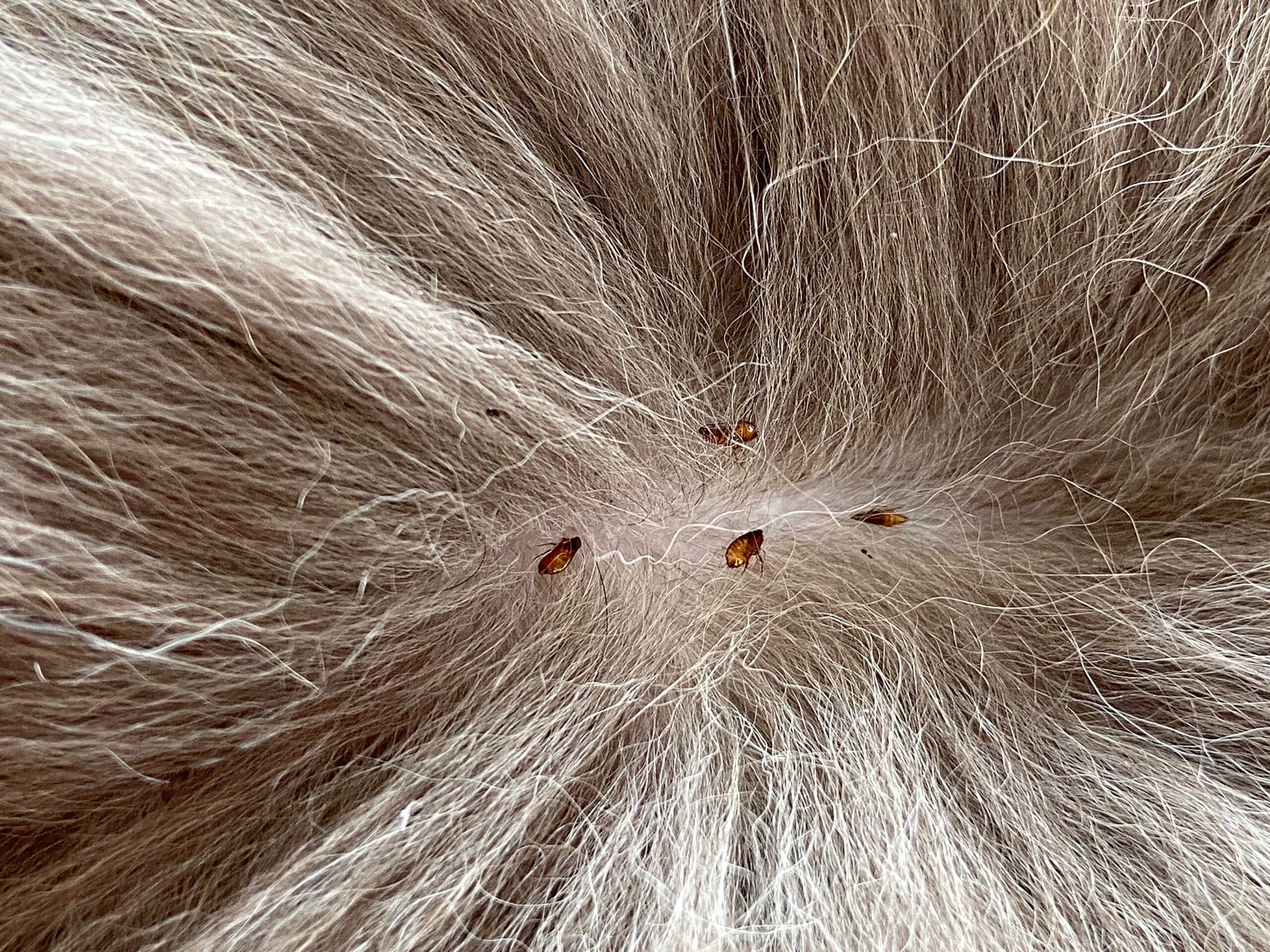
Fleas are tiny insects that feed on blood and are one of the most familiar parasites affecting dogs and cats.
Pets with fleas may scratch, lick or nibble themselves more than usual, and some can develop flea allergy dermatitis, where even a small number of flea bites can cause significant itching and skin irritation.
Once fleas become established, the majority of the flea population can be present within the home rather than on the pet itself. Eggs and developing flea stages may be found in carpets, bedding and soft furnishings, or even the dust between floorboards, so established infestations may require both treatment of pets and careful environmental management.
Fleas can also play a role in transmitting tapeworm, as pets can become infected if they swallow an infected flea while grooming.
Ticks
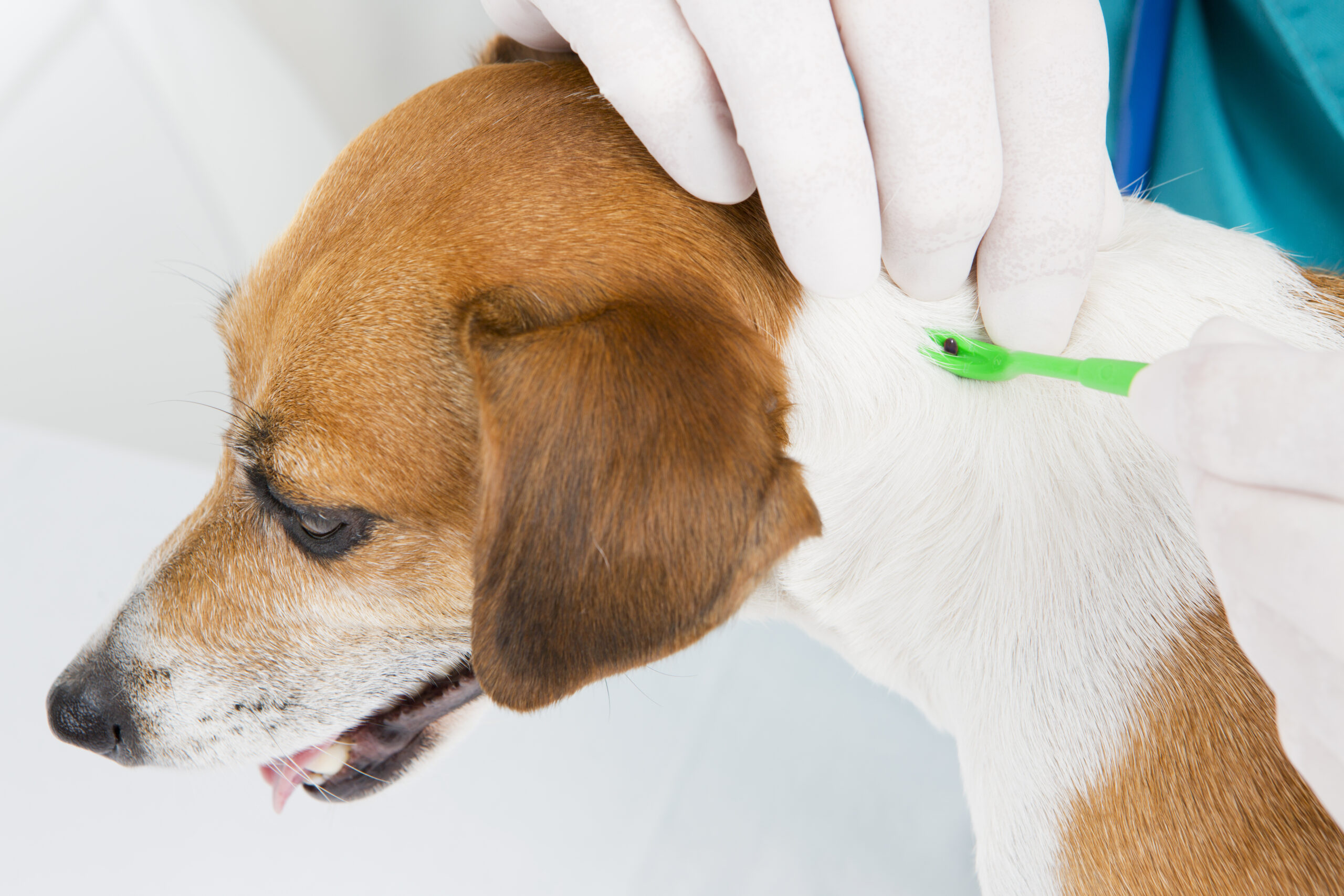
Ticks are small parasites that attach themselves to the skin and feed on blood.
Dogs and outdoor cats may encounter them while exploring areas such as woodland, long grass, heathland and countryside. Although tick activity is often higher at particular times of year, exposure can occur whenever conditions are suitable.
Ticks are significant because they can transmit infections, including Lyme disease.
Checking your pet regularly is therefore a useful habit, particularly after walks through long grass or wooded areas. Common places to look include around the head and ears, neck, feet, armpits and groin.
If your pet regularly visits areas where ticks are found, your vet may recommend preventative treatment alongside regular checks.
What about worms?
“Worms” actually covers several different internal parasites, and your pet’s lifestyle plays a particularly important role in determining their risk.

Roundworms
Roundworms are common in dogs and cats, particularly in puppies and kittens. Pets can pick up infection from contaminated environments, or from prey in the case of hunting or scavenging, and some roundworms can also pose a risk to human health.
Tapeworms
Pets can acquire tapeworm in several ways. One common tapeworm is transmitted through fleas, while hunting and eating prey or raw animal products can increase exposure to other tapeworm species.
This is one reason why a cat that regularly catches mice, or a dog fed raw meat may require a different worming protocol from a pet without these risk factors.
Lungworm
Dogs can become infected with certain lungworms through contact with infected slugs and snails, or potentially their slime. Dogs do not necessarily have to deliberately eat a slug: exposure may occur while investigating grass, drinking from outdoor bowls or playing with toys left outside.
Lungworm infection can cause a range of signs, including coughing and breathing problems, and in some cases it can interfere with normal blood clotting.
Your vet can assess whether lungworm protection should form part of your dog’s parasite prevention programme, based on their risk factors.
Tablets, spot-ons or injections?
There are several ways in which parasite treatments can be given. Depending on the pet, the parasite being targeted and the product selected, options include:
- Oral tablets or chews
- Spot-on treatments applied to the skin on the back of the neck
- Injectable flea and tick prevention (currently only available for dogs)
There is no single format that will suit every animal.
One dog may happily take a tablet hidden in food, while another seems capable of detecting medication inside even the most carefully disguised piece of cheese! Some cats may be easier to treat with a spot-on product, while other options may be preferable, depending on the protection required.
Choosing the right product is not simply about convenience. Different parasite treatments protect against different parasites, and remain effective for different lengths of time. Your vet can explain what a particular product covers and how frequently it needs to be given.
It is also important never to use a parasite product intended for a dog on a cat, as some ingredients used in dog products can be highly toxic to cats. Likewise, do not use dog or cat products on rabbits, or vice versa, unless specifically instructed.
Parasite prevention and our Heritage Health Plan
The Heritage Pet Health Plan is designed to help owners spread the cost of routine preventative healthcare through regular monthly payments.

The plan includes parasite prevention appropriate to the individual dog or cat, alongside benefits such as vaccinations, six-monthly vet checks, routine nurse consultations and discounts on neutering and dentistry. Home delivery of parasite treatments is also included as standard, helping to make it easier to keep preventative care on track.
You can find out more about our plan on our website 🔗 https://heritagevets.co.uk/health-plan/
If you are unsure when your pet was last treated, what their current parasite product covers, or how frequently they need treatment, please speak to our team. We can assess their lifestyle and help create a preventative healthcare plan that suits their needs.