

Neutering Dogs and Cats: Timing, Options, and Recovery

Neutering is one of the most common procedures we perform in practice. Pet owners often come to us with completely reasonable questions: When is the right time? Will it change my pet’s personality? How long will recovery take? Is keyhole surgery an option?
The honest answer is that neutering isn’t “one rule for every pet.” Age, breed, size, lifestyle, and overall health all matter. Our role is to help you make the best decision for your pet, with a plan that balances long-term health, behaviour, and safe recovery.
Below is a clear guide to neutering cats and dogs, including realistic time scales and what to expect after surgery.
What do we mean by “neutering”?
In male pets, neutering refers to the removal of the testicles and, in females, the removal of the ovaries and, often, the uterus.
The goals include preventing unwanted pregnancies, eliminating the risk of certain health conditions, such as ovarian tumours, womb infections (pyometra) and testicular cancer, and, in some cases, helping manage hormone-driven behaviours.
After the surgery, your pet will go home with an appropriate pain-management plan and may need a buster collar (cone) or a surgical suit to prevent them from licking the wound.
Neutering Cats
We can neuter cats from 5 months of age. This timing helps prevent unplanned litters (cats can become sexually mature surprisingly early, and aren’t picky – they can and will mate with siblings from the same litter), and it can reduce hormone-driven behaviours, such as roaming and fighting in male cats.
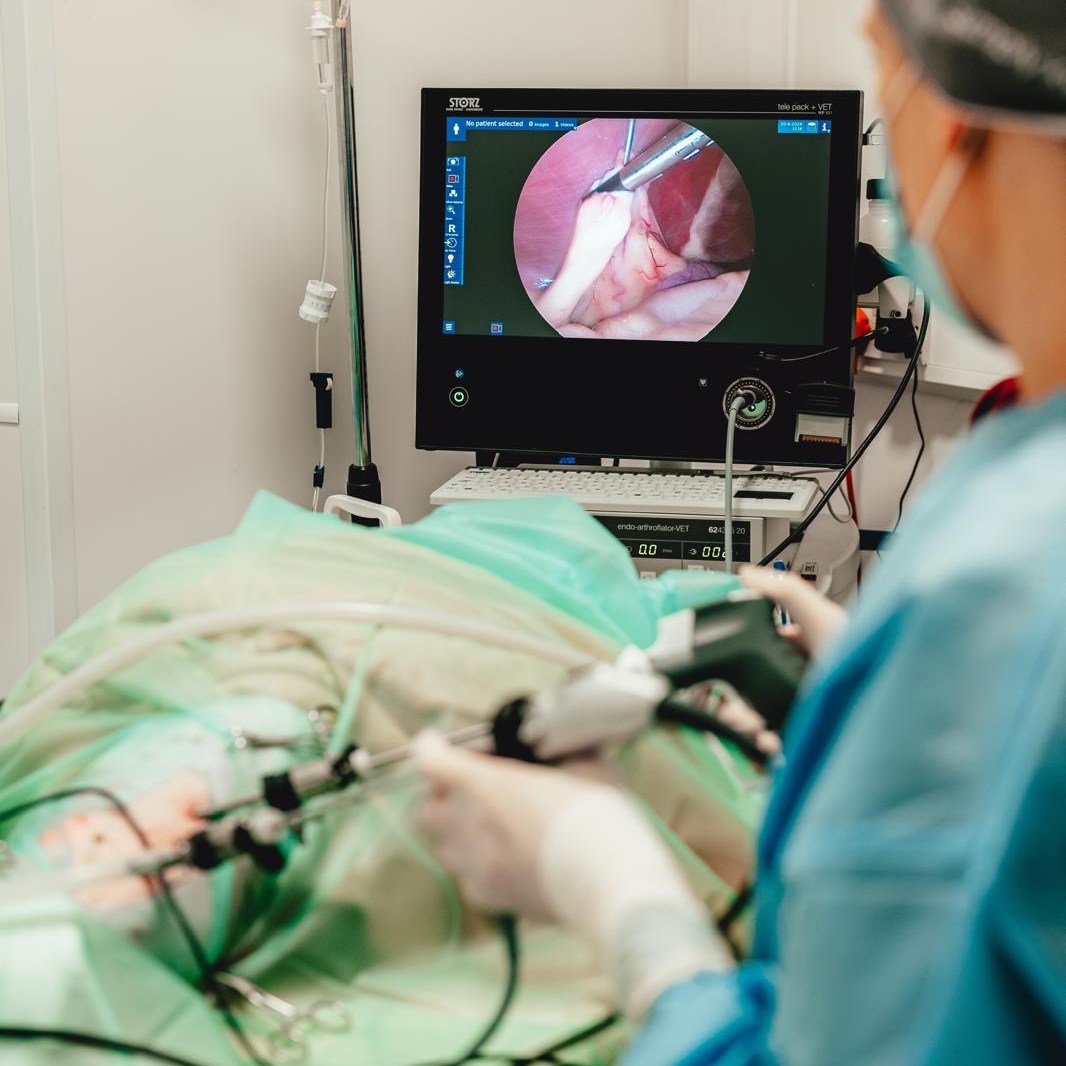
Cat spays can be performed traditionally through a small incision in the flank or abdomen, or laparoscopically (using keyhole surgery). Your vet can talk you through the pros and cons based on your cat’s size, temperament, and your preferences.
Most cats recover quickly and, within 2 or 3 days, their energy starts returning and their appetite becomes normal. Wounds typically heal in around 10 days.
Cats are notorious for acting like they are “back to normal” before they’re fully healed, so activity restriction is still important even if they seem fine.
Neutering Male Dogs
In many cases, male dogs can be neutered from 6 months of age, but for larger breeds, we recommend waiting until over 12 months, where possible. Growth, joint development, and overall maturity are important considerations, and larger dogs develop more slowly than smaller breeds.
Neutering is not automatically the right choice for every dog at every life stage. Some dogs may benefit from waiting; others may benefit from an alternative approach depending on behaviour, health, or lifestyle risks.
In some cases, we may recommend trying a temporary implant first. This can be helpful when:
- You’re unsure how neutering might affect behaviour
- We want to assess whether hormones are contributing to a particular issue
- You want a reversible option before making a permanent decision
This is not appropriate for every dog, but it can be a useful part of an individualised plan.
Always discuss your dog’s case with one of our vets; we’ll consider breed, size, behaviour, health history, and your home environment to recommend the best timing and approach.
Castration is a relatively straightforward procedure, although no surgery is without risk. Recovery is usually smooth and within 3 to 5 days most dogs are brighter, but still need restricted activity.
At 10 days, wound healing is typically complete (this is the key window for preventing licking, running, and jumping).
Spaying Female Dogs
Timing is essential when spaying female dogs, to ensure no hormonal complications for them in the long term. For most patients, we time the procedure for around 4 months after the start of their last heat.
For smaller breeds, spaying can be done from around 6 months, or you may choose to wait until after the first season (heat). There isn’t a single “perfect” answer; this should be guided by your dog’s development, lifestyle, and health.
For larger breeds, we would almost always recommend waiting until after the first heat, where possible. Larger dogs often mature later, and waiting can be beneficial for physical development.
In our practice, all our bitch spays are performed using keyhole (laparoscopic) surgery. Keyhole spays involve smaller incisions and result in a more comfortable recovery, reduced risk of surgical complications, and many dogs can return to normal exercise quickly (while still needing exercise restriction to protect healing for the initial 2-3 days).
The most important takeaway: talk to your vet about your individual pet
Neutering decisions should never feel rushed or generic. Cats can usually be neutered from 5 months, while dogs need a more personalised plan: from 6 months in some cases, but for larger breeds we often recommend waiting until over 12 months, and for female large-breed dogs we almost always wait until after the first heat, where possible. We also have alternatives, like the implant, when it’s the right fit.
If you’re unsure, book a consultation or contact us. We’ll discuss your pet’s breed, lifestyle, development, and any behaviour concerns, then recommend the safest timing and the best option for long-term health.